Mend / Guide
Reattach a loose hem by hand
Use the surviving fold to recover the original length, then secure it with stitches that barely show.
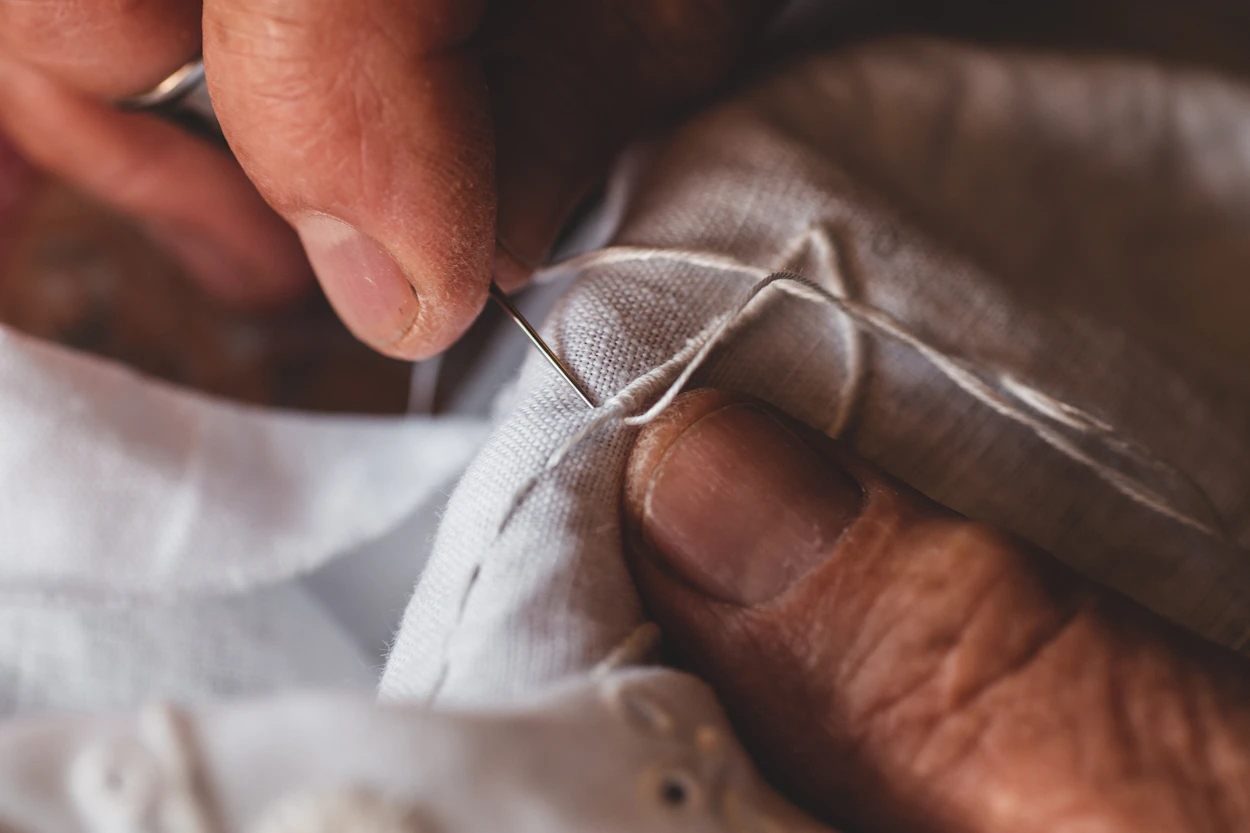
Identify which fold has fallen
Turn the garment inside out and follow the bottom edge from the loose place to a section that still holds. A double turned hem has a raw edge folded out of sight. A single turned hem may have a separate stitched finish on that edge. In both cases the line you want is the one that holds the folded allowance against the garment, not necessarily every row of thread you can see. Examine the good section with a fingertip under it so that you can tell whether the holding stitches are hidden between layers or visible as topstitching.
This method is for a loose attachment on an ordinary woven garment whose fold and fabric are still sound. If the crease itself has worn through, sewing it back up will not replace the lost edge; you may need a shorter hem or a facing. A stretch garment or a hem caught into a lining also needs a different approach. If you can't move the lining independently where you intend to stitch, first work out how the layers were attached instead of fastening them together along a new line.
Recover the length from marks that already exist
Find the horizontal crease where the edge used to turn. Lay the garment on a table with the crease relaxed rather than pulling the loose segment straight. Measure the hem depth at both ends of the opening, then mark a few points across the gap. On trousers, compare the other leg at the same seam positions. On a curved skirt the old fold may show a little gathered fullness inside; preserve that distribution rather than dragging it toward one end. Taking up a uniform depth from a stretched raw edge can introduce a dip on the face.
Remove detached thread that would get caught in the new line, but leave intact stitching in place. Bring the allowance up on the crease and pin across the open section. Baste instead if the pins distort a fine fabric. Hang or drape the item and check from the face that the fold flows into the untouched sections. A ruler checks depth, but sighting the hem at eye level is better for spotting a tiny jog where the repair meets the old work.
Put the long part of the stitch inside
Thread a fine hand needle with a single strand. Start on the intact portion with a small anchor hidden in the allowance. Fold the edge of the allowance back slightly so you can see the space between it and the garment. Take a tiny bite of the garment from the wrong side, catching only a thread or two of the cloth if it permits. Take the next bite through the upper part of the allowance, so the longer travel of the thread stays between the layers. Alternate the two bites while following the old line.
Lay the fabric down every few stitches and let the thread settle. It should hold the allowance against the body without drawing a dotted ridge. In a quiet section of a firm woven hem, about a quarter inch between catches is a starting point, not a rule. Look at the old spacing and work a little closer where the cloth wants to lift near a join. At the far end, continue into the sound area by a few stitches and secure the thread inside the allowance, out of sight.
Work through a short opening on a trouser leg
Imagine the back of a woven trouser leg has dropped for about four inches. The good hem is one and a quarter inches deep at both ends and the old crease is easy to see except at the centre. Put a basting tack at the centre at the measured depth, then add one midway on either side so the fold can't swing on a single point. Turn the leg right side out and compare its lower line to the other leg. If the basting has pulled the back higher, release it and realign the fold before stitching.
Turn the leg back and begin just before the first loose stitch. Near the side seam, move the needle by hand through the part of the allowance you can reach without forcing it through the entire pile of seam folds. Take a shorter bite where space is tight; then return to the ordinary spacing on the flatter section. Remove the basting and look from the face. A very small thread mark may be unavoidable on some fabrics, but a line of indentations points to tension you can still correct.
Separate stitch problems from fold problems
If individual dots show up in angled light, try smaller catches or a less shiny thread. If the cloth is dented between dots, first ease the tension rather than making the catches even smaller. If the surface is smooth but the hem hangs unevenly, sewing another row won't help; reopen the uneven part and recover the depth or the original distribution of fullness. An iron used at a fabric appropriate setting may help settle a correctly shaped fold, but hard pressing can imprint the allowance onto the face.
A clearly visible original topstitched hem deserves a separate decision. Hand attachment can make a small loose section usable if remaining holes are subtle, but it won't recreate a conspicuous machine line. For a consistent appearance, test a matching machine stitch on folded scrap before working on the garment, especially where the repair overlaps old stitching. Avoid an extra parallel row merely because the old path is awkward to find; the two rows can make the repair look wider than it is.
Judge the repaired line while the garment is worn
Check three positions: lying flat, hanging, and moving as it normally does. Look for a step where the fold joins the intact part and feel inside for a place that could catch a shoe or toe when dressing. Lift the allowance gently with a fingertip at the ends of the repaired stretch; the attachments should hold without exposing a long thread bridge. On the outside, compare the treated area with the other leg or the rest of the skirt in ordinary light.
After the next wash the label permits, look at the fold while it is dry and unpressed. An allowance that opens at one end may only need a better anchor there. If the fabric at the crease develops a new split, stop resewing the same fold and plan for the worn edge itself. The useful result is a hem that hangs at its old length and stays up as you get dressed, not one that looks newly made from the inside.