At Home / Guide
Set up a towel rotation
Give each towel a job, a place to dry and a clear route back from the wash.
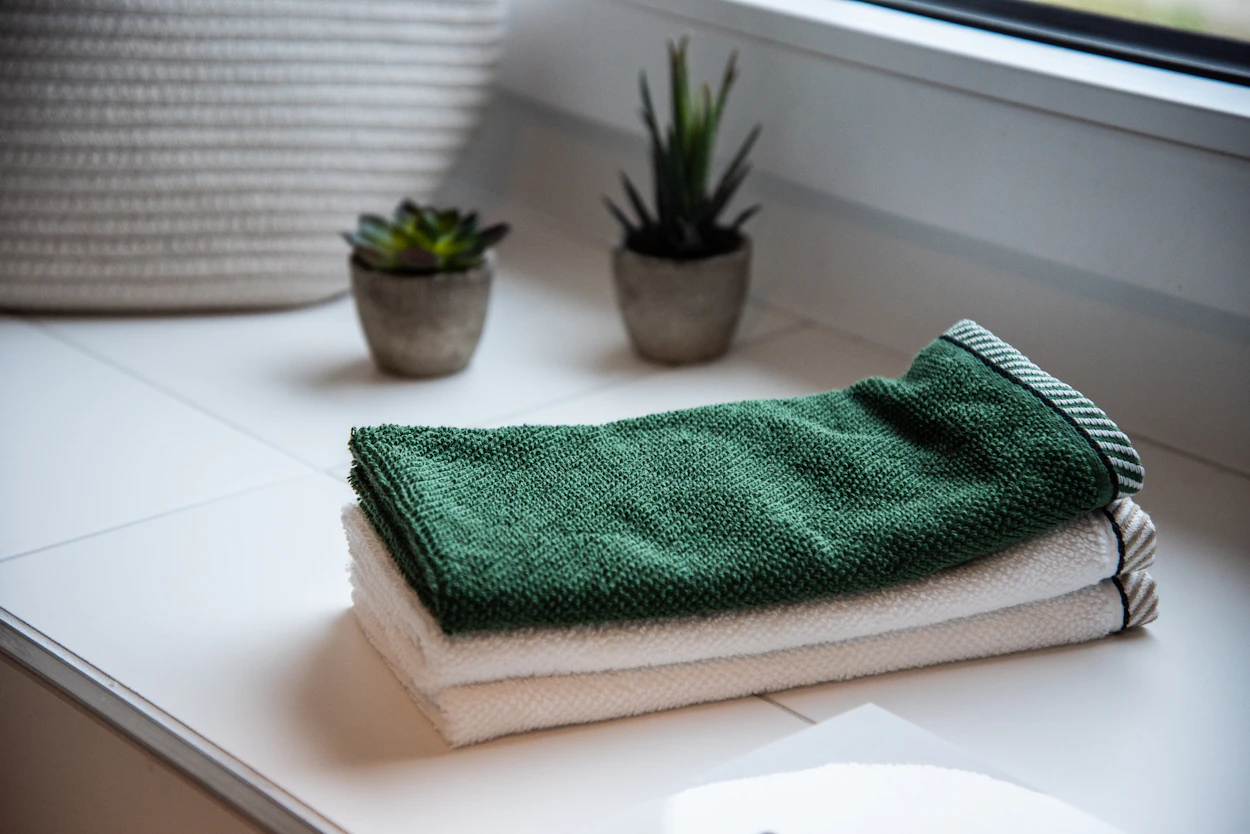
Count places to hang before counting towels
Look at the bathroom just after the busiest part of the day. Which towels are spread out, which sit on top of one another and which turn up on a door or the floor because the obvious hook is taken? Write down the number of towels that need separate hanging space, not the number that could technically fit on the rail. A long bath towel doubled behind another might be harder to dry than a smaller one hung on its own. Stand in the place from which you reach for a towel and see whether the empty hook is actually convenient.
List active towels by use. Bath towels, hand towels, guest towels and cloths for household jobs need not share the same cycle or live in the same stack. Put hand towels somewhere they can be changed without moving the bath towels. Keep cleaning cloths separate, and avoid relying on a faint stripe that only one person recognizes. If the family confuses identical bath towels, assign positions on the rail or use an existing difference in color. For a towel you hang from a hook, check whether the attachment leaves the whole towel bunched into a thick corner or allows it to open up.
Size the clean reserve around a real wash
Start with what is hanging now and count how many replacements you typically put out before washed towels are dry and folded. The wait includes time in the hamper, the wash itself, and the drying method you actually use. A spare towel used while washing is doing a job even if it only comes out briefly. Add a small buffer only where you can name the event it covers, such as an overnight guest or missing your usual wash day. The towels sold in a matching set need not correspond to the amount of shelf space the household can use.
Look at how much of the towel laundry fits a load according to the appliance instructions. If towels collect faster than you can dry them, buying another stack may hide the bottleneck until the shelf is overflowing. Try sending fewer items through each wash or using existing smaller towels where they are comfortable. Make sure the incoming fresh towels have a shelf destination, and the outgoing towels have a place to go while waiting to be washed. Follow the care instructions on each towel; a difference in permitted drying can make some items poor candidates for the quickest turnaround in your house.
Run the numbers in a shared bathroom
Imagine two adults share a bathroom with two usable bath towel positions and a separate hand towel ring. Both bath towels go into the wash on Saturday; they are normally dry on Sunday. Two more bath towels cover that interval, making four for regular use. If the hand towel is also replaced once midweek before the used one goes into Saturday's load, a third lets the household put out a clean one on wash day. The counts differ for a reason: the hand towel gets two changes before any item of its type returns.
Now suppose a guest arrives Saturday afternoon. An already owned fifth bath towel can sit separately for that use, instead of being taken from the pair the household needs until Sunday. If the second bath towel on the main rail is still damp when the next person wants to use it, an extra in the cupboard is not the first fix. Try giving the two towels more space or swapping one of the bulky ones for a lighter piece already in the cupboard. Watch what happens on the day the room is busiest before deciding which number to keep.
Retire by condition and usefulness
Take the shelf stock down and open each towel fully. Check for torn hanging loops, edges that unravel when handled, bare patches and towels that shift water around rather than feeling useful. A loose loop on otherwise sound cloth is a small repair; thinning across much of the center is a different situation. For a towel that gets overlooked, find out whether it is hard to reach, unpleasant to use or simply the wrong size for its position. The back of the shelf can accumulate perfectly usable towels while the easy ones are washed over and over.
Put sound hand towels at the front in the order you want them used. Move an intact but faded bath towel to a specific backup job only if that job exists. A towel with a damaged edge may become one or two useful cleaning cloths if the remaining fabric is sound and the cut edges can be finished. Don't keep five rag towels for a job that needs one. Set aside the textiles that really are finished and check which local collection routes, if any, accept their condition. Store clean stock only once it is dry throughout, including hems and loops.
See whether the next change works without you
Leave the hand towel stack where someone can get at it even if another person is using the bathroom. A cupboard behind the bathroom door can work for the towel currently hanging and fail for every replacement. In that layout, put one clean spare in an accessible linen cupboard and replenish it from the larger stack after laundry.
Ask another person to swap the hand towel and put the used one in the laundry without being told the new arrangement. Watch which stack they open and whether they pick up a bath towel by mistake. A shelf label works where the folded shapes are almost identical; a different location works better when a label is difficult to see. Put the smallest fold where you can lift it with one hand, and leave enough space above the stack to take the next towel without pulling the whole pile forward.
At the end of a normal week, count how often someone ran out, which towels never moved and whether hanging space was free when it was needed. A rotation is working when the clean replacement is available before the old towel is removed, used towels do not displace clean stock, and each bathroom towel has a usable spot between uses. If there is a shortfall on only one day, adjust the swap or wash timing before adding inventory. Recount after a change in household size or in your drying routine; a shelf that was right in summer may need a different turnaround later.