Fabric Notes / Guide
Store fabric scraps by what you can make from them
Measure usable shapes, keep care information with the good pieces and give small leftovers a real destination.
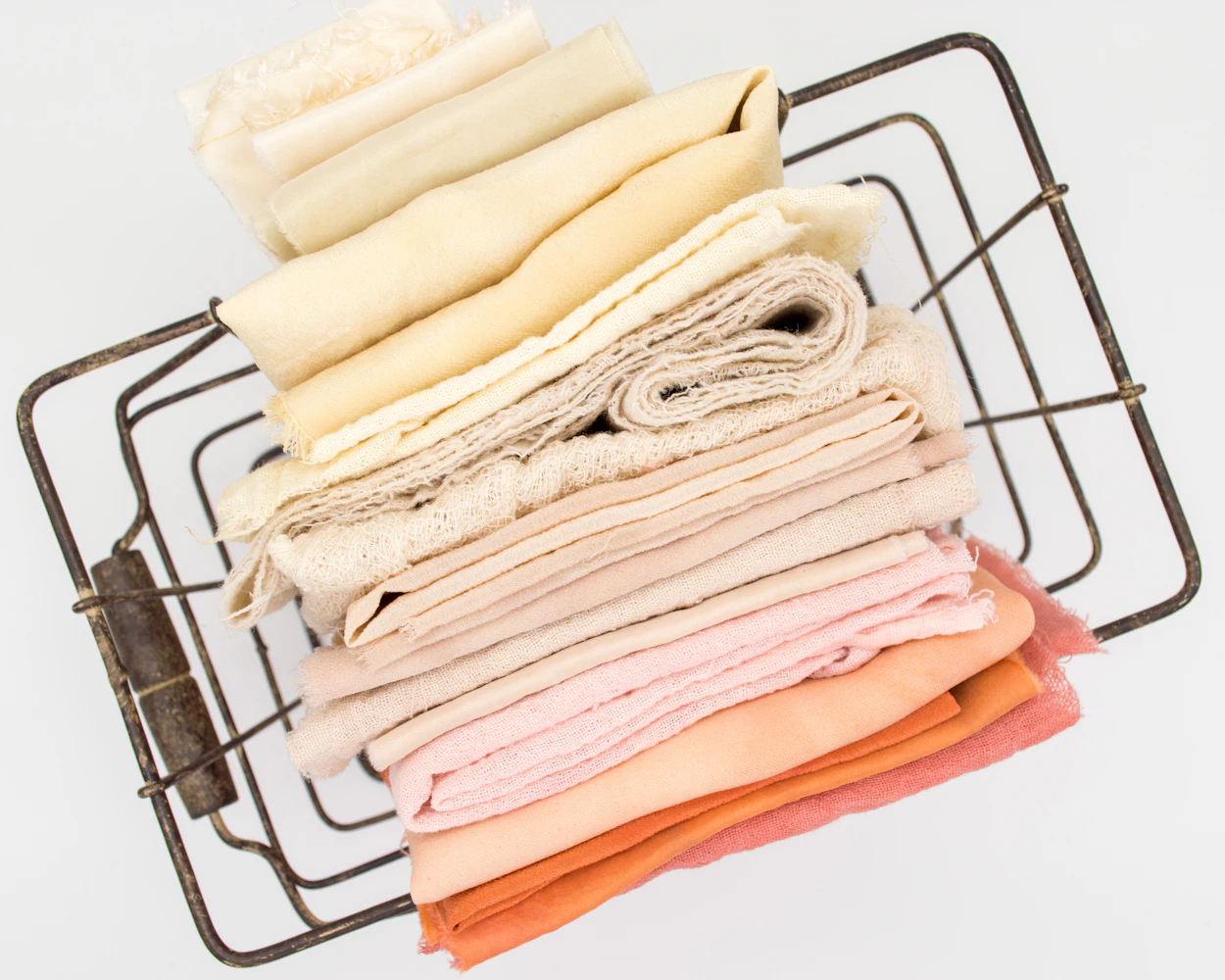
Start with the pieces you actually reach for
Name a few jobs you have done or are likely to do next. A broad lining rectangle, a narrow hanging loop, and a soft patch for a worn knee have different requirements, even if all three come from light blue cloth. Set out a sample pattern piece or a paper rectangle for each common job. Use pieces large enough to include allowances. If your narrowest loop starts eight inches long, a pile of five inch strips is not a supply of loops for that pattern. Keep a small separate stock for practice seams if you use it often, with enough area for two strips and a fold.
Label containers with those uses in your own words. One basket can hold bag and pocket sized pieces; a slim tray might hold straight strips. Leave room for a small reserve of matching scraps kept for repairs. You can sort by colour within a group where colour matters, such as visible patches. In a large undifferentiated colour pile, a piece that could line a pocket hides under twenty pieces that cannot. You want to be able to tell what is available without refolding a whole shelf.
Measure rectangles inside odd shapes
Flatten the scrap without stretching, and ignore frayed edges, strong creases you cannot remove, old needle holes and fabric that is thin enough to reject. Lay your paper template inside the shape or use a ruler to find the largest useful rectangle along the intended axes. A piece shaped like a boot might have a twelve inch leg and a six inch foot, but the smallest width under the template determines whether the piece can yield a whole lining. Mark the usable dimensions on the tag, in a consistent order such as across grain by along grain, and add an arrow if the orientation matters.
Do not cut everything to rectangles as part of tidying. The leg of an odd scrap may be ideal for a strip while its broader area can make a patch, and a future shape may need the corner you would trim away now. Fold so the usable portion is obvious, or sketch the L shape on the tag and put measurements beside the two spans. Keep a generous remainder attached if it can do something independently. A small shortcut today is not worth losing the largest continuous piece of a useful cloth.
Save the facts that don't survive a move
Record what you know, not what the piece resembles. A clipped tag can list the original project, fibre and care if known, and whether the scrap went through the same preparation. Mark right side or nap when that would be difficult to recover. Add a short note about a defect if a future user might unfold the piece and mistake it for fresh yardage. If you cut along a straight grain or kept a selvage, mark that too. For stretchy scraps, indicate the main direction of give rather than storing them with woven strips simply because their edges are narrow.
Place a matching repair reserve in an envelope marked with the garment or household textile it belongs to. Include enough fabric to reach beyond a future damage area if you have it, and keep one readable care note with the envelope. A scrap kept for a green cushion cover can be found by the cushion's name even if the original fabric name is forgotten. Keep unlabelled pieces separate from those with known care if you plan to use several together in a washable item.
Sort one mixed bundle from a worktable
Imagine a pile left from making a denim apron and a pale lined pouch. The denim has an irregular piece with a sound five by seven inch area and another solid strip two by nine inches. Put the first with hard wearing patch pieces, or reserve it for the apron if you won't have another match. If the narrow strip runs the right way and works with the planned folds, put it with tabs. A pale poplin corner has a clear ten by thirteen inch rectangle once its needle holes are avoided. Place it with pocket and lining cuts and label the usable rectangle rather than the full uneven extent.
A cluster of three inch snippets in the same bundle will not do those jobs. If you have a small patchwork pattern that uses two and a half inch squares, check how many full squares actually fit, then put those pieces with that project. Save enough for the work you have in mind rather than transferring every snippet. A fuzzy shred with no sound edge may go to an appropriate reuse or disposal stream in your area if accepted. Keeping it in the lining bin merely shifts the sorting to your next sewing session.
Give storage a physical limit
Fold the larger fabric pieces with their tags facing the opening of the bin. Set short strips upright in a shallow tray or wrap similar ones on a card so they do not disappear underneath larger cuts. Keep fabric clean and thoroughly dry before putting it away, and pick a place away from a damp wall or prolonged bright light. Use containers you can open easily. Extra compression is seldom helpful for offcuts you want to compare quickly, and tight folding can leave unwanted marks on some finished surfaces. Store vulnerable fabrics according to their care guidance.
Choose a limit that matches the workbench. If the strip tray is full, pull its least useful pieces and compare them to the new ones. Prefer longer sound lengths or a distinctive match over the reflex to keep whatever you handled last. For pieces you might donate or recycle, check what a local recipient accepts; fibres, coatings, condition and minimum dimensions may affect where they can go. Do not assume that a mixed bin will be usable by another sewer just because you no longer need it.
Try retrieving three cuts without emptying a bin
Ask your storage to supply a patch for something you own, one straight strip for a named project and one pocket sized rectangle. Pull candidates by their tags, then confirm each with the paper template, the marked direction and the care needs. If several scraps look long enough folded but fail the full shape check, fix the measuring habit as well as the labels. If the patch reserve sends you into the general bins, give it its own labelled place beside the mending tools or at the front of the fabric shelf.
A useful system leaves a clear answer even when a bin has nothing suitable. Record what remains when you cut part of a labelled piece, and move it down to the next use instead of returning it under an obsolete measurement. Keep one spot for a new unmeasured offcut if you cannot process it immediately, and sort it the next time you clear the worktable. A scrap belongs on the shelf when you can find it, tell if it fits and return the remainder without starting the sorting job again.