At Home / Guide
Style mismatched table linens
Set a table with mixed cloths by repeating one detail and giving different pieces useful jobs.
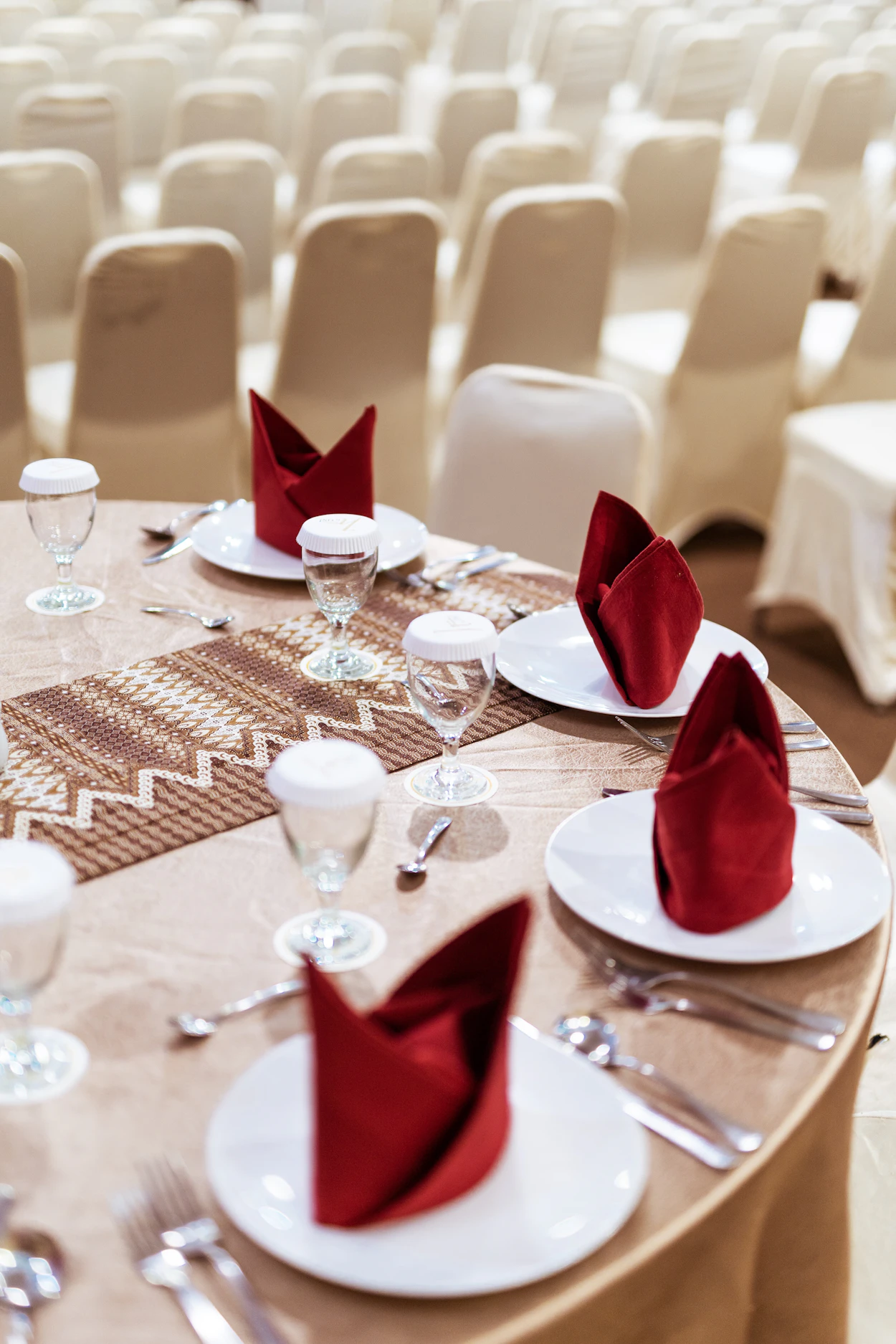
Sort what you own by use, not by set
Spread out the placemats, napkins, runners and any tablecloths you can see yourself using for the meal. Put a plate and glass on each kind of mat. A thick woven piece with an uneven border may make a better place for a broad bread basket than for a glass; a soft square that bends readily may be the better napkin, even if its original partners are gone. Measure only when a piece looks too small or too deep for its job. In a mixed table, the things people touch should work for them before you worry about which patterns are familiar together.
Pull damaged items from the meal pile while you can open them flat. A loose thread that can be secured is a reason to mend the cloth later, while an unstable raised fold is a reason to try something else under a plate. Compare your usual dinner and lunch plates if you use both. A small round mat under a lunch plate can look well proportioned but disappear under a wider dish. Put the most usable pieces nearest the seats where people reach farthest or need the most open place setting, regardless of whether the colors happen to match there.
Repeat one detail people can see across the table
Choose one common thread that is already in the pile: blue in several different strengths, a stripe found on two unrelated cloths, or the same folding shape on four different napkins. Lay out your dinnerware first and repeat the chosen detail in at least two places you can see from the entry to the room. You do not have to repeat each fabric. If a patterned piece keeps jumping out even after a color from it has been repeated, give it some breathing room. Put it with a quieter large cloth or move it apart from another large print that competes for the same attention.
Judge the strength of a print at the planned scale. Tiny dark checks may merge into a quiet tone from across the room, while broad flowers may remain strong. The amount visible matters as much as the shape of the pattern. A folded patterned napkin shows much less than a placemat of the same size left open under a plate. To quiet the largest piece, let blank tabletop or a plain place setting separate it from the next print. Look from both ends while you move pieces around; a pleasing gap seen from above can nearly vanish when you are sitting down.
Make a six person layout from incomplete sets
Say you have four oat colored mats, two dark blue mats, three blue checked napkins and three plain ivory ones. Set the oat mats down the long sides of a rectangular table and the two blue mats at the ends, if the end places have room. Then set a checked napkin at one of the end seats and two on opposite long sides, with the ivory napkins at the remaining seats. Fold all six the same width if their sizes allow. The blue then appears in more than one place without requiring each seat to have a blue partner directly opposite.
Suppose the oat mats are too wide for two places on each side without crowding the glasses. Skip the mats and bring back the blue as a small fabric accent beneath a dry bread basket, provided the basket sits steadily, or use a different existing blue cloth that fits. The repeated checked napkins can carry the color by themselves. If the blue mats have a bulky edge, move the basket instead of stacking fabric until it balances. The example works just as well with mostly bare table because it is the rhythm of the visible blue that made it feel intentional.
Edit the parts people have to move
Sit at the end and do what a guest will actually do: unfold a napkin, slide a plate closer, set a glass down and pass the bowl. Remove a fold or an extra textile wherever you use two hands to get past something that should take one. If two mats overlap because their shapes differ, take the larger one away rather than stacking their edges under the dish. Use a simpler base when serving from the center. A runner can take up space you need for the bowl and its spoon, while a bare strip is easy to use and wipe after the meal.
Workday and special occasion layouts can use the same pieces in different roles. Save the cloth that calls for separate care for a meal where you are happy to wash it separately. If a napkin has trim that feels awkward against the face, keep it for a different use or leave it out. Do not hide a genuinely useful plain napkin under a decorative one. Where mixing means different wash instructions, gather items into the right laundry groups when you clear the table. If you are making a coordinated look at the cost of extra laundering steps every day, repeat color using fewer pieces.
Keep the arrangement that survives the meal
Look at the table from the doorway in the evening light, then sit in the smallest place setting again. The repeated detail should be visible while the settings remain usable, including a flat spot for each glass and an easy reach to the serving dishes. If the linens look scattered, remove one visual competitor before buying another piece to tie them together. You can record the arrangement with a quick sketch: blue at ends, checks spread around sides, no runner. A sketch is also easier to adapt to four places next time than a photo that makes the number of items seem fixed.
After clearing, take note of what actually stayed where you put it. A napkin that was too small and a mat that took half the glass space tell you more than how the table looked empty. Put the pieces that served their jobs together in storage if their care allows, and return the rest to their own shelf. The point of the mixed setting is to be able to use what is available. If one blue mat has gone to the wash, try the same arrangement with the checks alone before looking for an exact replacement.