At Home / Guide
Test curtain light before choosing a lining
Look at privacy in the evening as well as the light you want to keep in the morning.
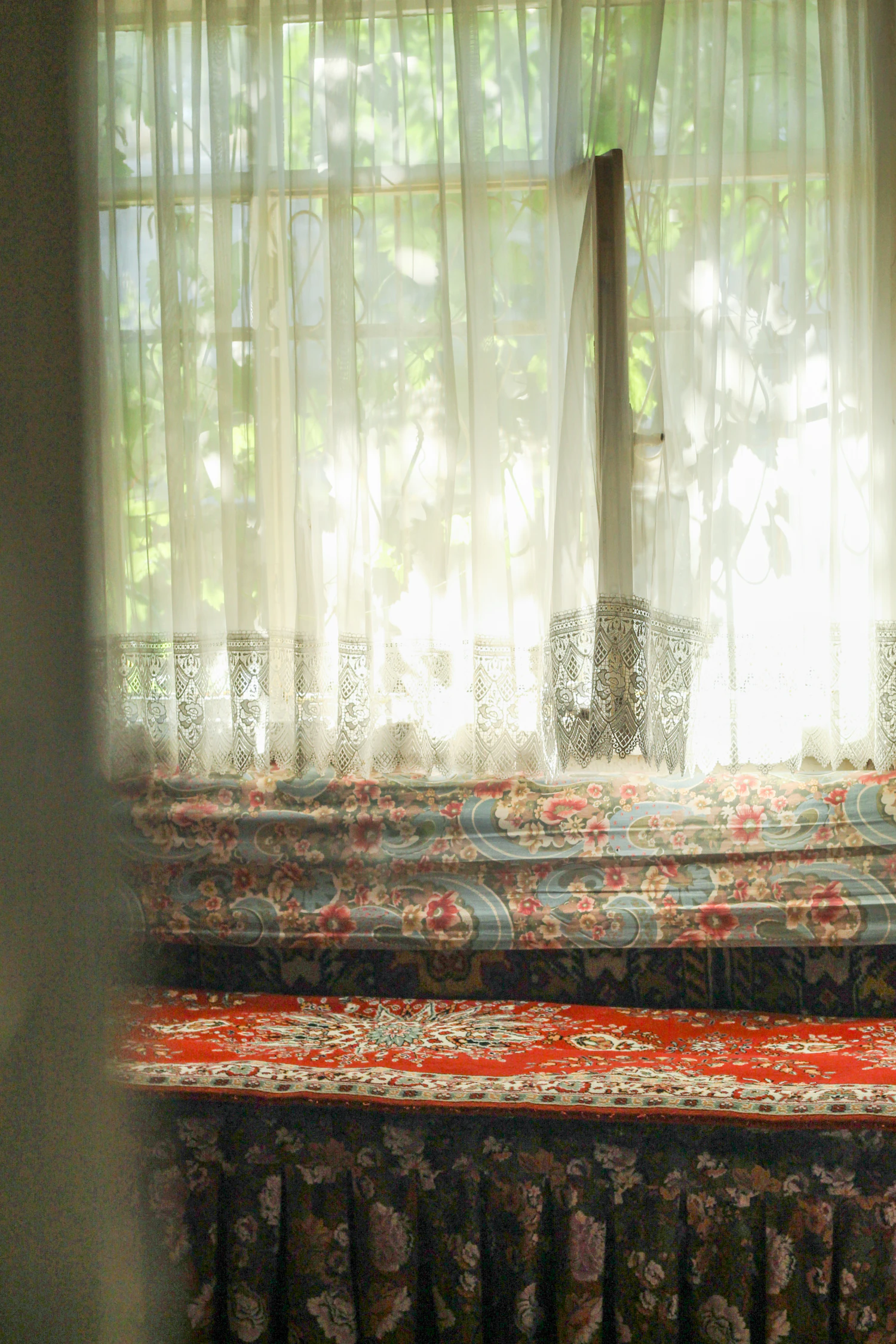
Separate glare, privacy and darkness
Begin at the place where the curtain bothers you most. At a desk, the complaint may be a streak of sun on the screen at breakfast. In the evening, it may be that a lamp puts the whole room on view from the pavement. In a bedroom the issue could be a narrow stripe of light visible from the pillow. Write these down separately with the time and the viewing position. A lining that fixes the view of the lamp may take away more daylight than you want, and fabric that looks very dark in your hand can still leave a bright perimeter.
Leave a small baseline note before covering anything. Describe what is visible in the uncovered window, where the indoor light sits and whether the problem reaches the whole pane or only one side. If the desk glare comes from a small patch of direct sun, a second layer that can move separately might let you cover the patch without darkening the entire wall. Where there is no convenient way to operate two layers, the more useful choice may be a single medium cloth and a change in desk position.
Make the two samples comparable
Get the largest manageable sample of the face fabric and the lining, ideally enough to see a fold and a flat area side by side. Use the face fabric alone first and then hold the lining behind it without quite stretching either one smooth. Position both trials over the same section of glass and orient the lining as specified by its maker. A sample pinned tight over a small book can make a weave look closer than when it hangs; conversely, folds make parts of a sheer look denser than its flat gaps.
Compare the fabrics against the same outdoor light without changing the room lamps or walking to a different angle between trials. An existing panel of a similar weight can stand in for the shape of a full curtain, but do not use it to infer the opacity of a different textile. Judge color separately: a pale lining can change the apparent color of an open weave at the window. That matters if the cloth looks right beside the sofa on a tabletop and wrong once daylight comes through it.
Observe from inside during the problem hour
Put the swatch where it actually intercepts the bothersome ray, then go back to your seat. Try reading a page and looking from it to the window, or moving a document around on the screen. Ask whether you can use the seat without changing posture or needing to turn on a lamp. With a lining, also look at the wall around the window: a dim room with a bright uncovered margin can still feel uncomfortable to look toward. Compare exposed side, top and bottom separately; an improvement in the middle is only one part of a whole window.
Suppose an east facing room gets a distracting glare across half a laptop screen at eight in the morning. A loose pale weave could make the window look gentle while the screen is still difficult to read; a second fabric might solve the reflection but leave the keyboard shadowy. A useful trial is to shield only the affected side, then switch sides of the seat with the sample held in the same place. If the glare disappears with a small shift of the screen alone, don't buy a much darker curtain for that particular problem.
Reverse the viewing direction after dark
Once outdoors is darker than indoors, use the lamps and overhead light you would normally have on. Ask someone to stand or move normally inside while you look from an accessible place a passerby could use. Test with the lamp in its usual position, then switch it off or move it out of the direct line of sight as a separate trial. Record whether faces and room details are visible, whether you can only see movement, and whether silhouettes appear close to the fabric. Those results may call for different decisions depending on what the room is used for.
If you are working alone, place a sharply outlined ordinary object just behind the sample and compare it with an object farther into the room. The object does not simulate a person, but it helps show whether the weave reveals detail only at close range or across the room. Do not lean out of a window or use a position you cannot normally reach. Where there is no accessible exterior viewpoint, treat the result as provisional and get help from someone who can check from a suitable location.
Trace the edges before choosing more opacity
Stand back and follow the light to its source. A bright vertical line between panels is a meeting problem; a glow near the wall can come from the gap between the curtain and the frame. Light passing through a seam or heading is different again. A lining that blocks the sample area may leave all three unchanged. Check how far the outer edges can close, whether the center allows an overlap and how much clear travel the hardware offers. If the gap is at the top, check the heading and its position instead of simply buying a longer panel.
Hold a doubled portion of the new combination to see how much thicker a fold becomes. Then check the mounting and load guidance for the actual hardware before adding weight. A separate layer keeps the front cloth moving independently but needs space both across the wall and out from it. An attached lining follows a single motion but must hang without drawing up the face. If fitting different fabrics together yourself, confirm the two care routines are compatible before committing to a construction that cannot be separated.
Keep a simple before and after record
Write one pass condition for each job, in ordinary language: the screen is readable from the usual chair in morning sun; someone on the path cannot make out room detail with the lamps on; the bright line no longer reaches the bed. Note which fabric, lighting and viewing position you used. A sample gives you a reason to try one full panel or set where returns allow; it does not prove a privacy, darkness or insulation rating. Reserve any alterations until you know whether the unaltered panel works in the room.
With the finished treatment in place, repeat the observations instead of judging it only on a cloudy afternoon. Open and close it a few times, watch the center and sides, and look for a lining that drags or peeks out at the hem. If the trial meets the evening need but makes the room too dim by day, keep the daytime and nighttime jobs separate rather than hoping you will get used to the loss of light. Keep the notes for the next window, but repeat the check there; orientation and indoor lamp positions can change the result.